Saturday, April 03, 2010

I know, I know.


I wanted to keep to keep a safe distance from the polemics and the politics, and I've tried. But this is too much. So now it seems this blog has come full circle and I am back where I started - fuming over the Have Your Say pages of the BBC news website. But hopefully this will be just a one off, a very angry interlude, a rant - if you will.

So. Nutshell. Ricky Martin announces he's gay. The BBC tentatively inquires - "Does coming out affect careers?". Discuss.

Some responses:

"Today, being gay is no big deal. It is legal and accepted (except by some churches).

All this "coming out" business is getting sooo boring...."

"Like we hadn't already guessed. Who cares anyway."

"Those of us, from gay rights campaigners to complete bigots,who still care about a persons sexuality still make too big a deal of it.

The rest of us, maybe even the majority, could'nt give a fig what others get up to."

"What a ridiculous HYS. Bad enough you printed such a non-story in the first place.....now you want us to discuss the non-story?"

"Why do people think that a lot of us care what someones sexual orientation is. Its like an announcement that no-one really gives too much of a fig about. His music was boring before the annoucement imho and will probably continue to be middle of the road durge now this oh so major announcement has been made.

Oh just for the record Im hetrosexual, wow, thats interesting, but you really didn't need to know that did you?"

We're still in the first ten posts, by the way, no selective digging around required here.

FIRST OFF - Fig - really? Is this the BBC's automated way of correcting profanity, or is linguistic propriety making a comeback?

Second - Answer the damn question! Unless I'm mistaken, it wasn't phrased in such a way as to sollicit personal opinions about gay people in general - re-read the question and then look me in the eye and tell me the answer isn't obviously YES!

SHOCKING.

These responses from supposedly educated, intelligent and perhaps well-intentioned BBC news readers leave me in absolute consternation.

I am at a complete loss as to why people so apathetic to the issue bother to comment it in such numbers to voice their apathy when someone has clearly just left an identical response before them. Maybe they don't bother reading the rest of the posts. Good for them.

NO. Of course we don't need to know you're a goddamn heterosexual. Because being a heterosexual is not going to get you harassed in Poland, beaten up in Istanbul, or executed in Uganda!

IS that not worth perhaps a moment's discussion without people getting enraged about their time being wasted or being interrogated about such insignificant matters?

Ricky Martin, incidentally, happens to come from the predominantly Roman Catholic country of Puerto Rico, and I presume a large proportion if not the majority of his record sales were from Latin America - also a Roman Catholic stronghold in places, or so I hear. MAYBE just MAYBE an eyebrow or two will be raised. Not by BBC readers of course, because they are far, far above all that trivial nonsense.

And most of the irate respondents seem to have overlooked the fact that the question was not even about Martin! It was about the repercussions of coming out in general, which clearly has an impact in the regions I've just mentioned.

Not in the UK? Tell that to Jan Moir.

The worst kind of homophobia is the kind from patronising bigots, like Alain Soral, telling gay people they are not allowed to complain or even say anything related to their sexuality because "nobody cares" about it anymore. Any discrimination is all in your imagination because we couldn't give a "fig" what you get up to in your private lives. You'd love to think we have a problem with you - but we don't!

WHich, while we're at it, mirrors the worst, most insidious kind of misogyny or sexism. Put on the blinkers and ignore the bigger picture kind of tactic. Don't be an idiot - just because you're above caring doesn't mean people couldn't possibly feel discriminated against in any form, because, crazy as it might sound, you are not the world.

And what I find most nauseating is the ARROGANCE of people who aren't even in the position to make a meaningful comment to fume about how uneccesary the discussion is! It reminds me of the response of the white people in Jane Elliot's "Blue eyes" experiment in the UK. Along the lines of - this is pointless, there is no more racism in the UK, why are we even having this debate, etc. Oh and by the way, I happen to be white. While the Afro-Carribean lady in the corner fidgeted and said nothing, or occasionally dared to venture a cross-word which I couldn't make out because the indignant white folks were speaking over her so loudly.

Walk a mile in my shoes, and then tell me I am not entitled to complain. But in the meantime, and I've said this before, DON'T TELL US WE ARE NOT ALLOWED TO TALK ABOUT IT.

Wednesday, March 10, 2010

Painting by numbers


Last weekend I was in Paris where I received a more than satisfactory dose of haute culture. One of the places I visited was the Institut du Monde Arabe, and its current exhibition of Islamic art. This expo consisted of the stupefyingly extensive personal collection of a Nasser Khalili, composed of objects originating from all over the Islamic world, throughout the ages. Cases and cases of beautifully adorned manuscripts, absolutely jaw-dropping pieces of jewellry, all kinds of objects adorned with myriad styles and patterns... You get my drift. It was almost overkill. Especially in comparison with the sweet little exhibit I visited at Krakow's Ethnographic museum a few months ago. A much more modest assemblage, but beautifully presented and very eloquently and simply explained. I have to say if I had to recommend one of the two, I'd opt for Krakow, despite its humble size and scope in comparison to the reams of scintillating (and closely-guarded - no photos allowed!) treasures housed in the Arab Institute.

The reason for this is that, although displaying an ostensibly less impressive collection, the ethnographic museum was far mor successful in its attempt to explain and make sense of its subject. Admittedly, its scope was more limited, far less variety than I saw in Paris, but in a way that helped to keep it manageable for the mind, to get one's head around it.

The main angle of the Krakow expo was the idea that behind the abstract, geometrical patterns which adorn and characterise many examples of art and ornaments from the Islamic world (as well as more lowly household objects), are all intensely symbolic references to the divine and metaphysical, and testify to a very advanced and subtle understanding of the universe. This is art by mathematicians. And very devout ones at that.

Although the Paris expo took exception to the idea, let's imagine that broadly speaking, it is considered poor form to portray the human figure in art in the Islamic world, and unthinkable to try to create the image of religious symbols such as God or Mohammed. So in light of this prohibition, Muslim artists elaborated a profound and elegantly simple scheme of abstract symbols to convey a certain vision of the universe, and faith, in their images and adornments. A means to infuse their creations with meaning.

The presentation of the exhibit was fantastic, first of all. The space which houses the expo in Krakow was symmetrical in itself. A room divided into five sections, each of which dealt with a number, and examples of art and ornaments where this particular number was in evidence, accompanied with a succint explanation of the symbolic connotations. Something along the lines of, 1 is for God, the beginning and the end, 2 is the dualism, the symmetrical opposition between men & women, holy and human, light & darkness. 3 is the triangle, symbol of man and consciousness, a highly significant number for the Islamic faith, as awell as its multiples (the 99 names of Allah, for instance). 4 refers to the material world, shapes like the cube, square and cross, the four sides of the Kaba, the 4 elements and the cosmos. And 5 of course harks to the five pillars of Islam, commonly seen in the shape of the Hand of Fatima motif, or the five-pointed star which symbolises community of all Muslims in recognition of the fundamental principles of the faith. And so forth. So now you know.

If it sounds like an overly-simplistic, boiled down interpretation of the meanings behind these elaborate creations then I'm sure it is, to some extent. But I really enjoyed the clarity that it provided. A way of shining light on the schematical universe of symbols in the aesthetics of Islam, of stripping away the pretentiousness and obfuscation. It was extremely unpretentious. Unnecessarily so, since the pieces themselves were absolutely breathtaking. I've always been a fan of abstract patterns, but I'd never seen anything like this before. Truly someone who is capable of elaborating creations like the ones which adorn some of the most beautiful mosques in the world, must have a certain grasp of the scale of the universe, of infinity.

And a little cursory research shows that indeed, there are field days to be had by people whose intellect allows them to take a keen & informed interest in issues of abstract religious art and, say, quasi-crystalline geometry. The science of snowflakes. I so I imagine it would be.

The main angle of the Paris expo was perhaps an effort to counter stereotypes and generalisations about the Islamic world, to convey the diversity and richness of its artistic endeavour. The message being - don't take anything for granted. If so it is a noble objective. But one which is perhaps more conducive to frustration, confusion and unease. It was certainly far less accesssible than the ethnographic museum. In any case, I'm very glad I had visited the Krakow as an "introduction to the field" as it were, it definitely provided me with a basis in the matter, a kind of roadmap for deciphering and decoding the vast number of artefacts displayed in the Arab Institute.

Tuesday, March 02, 2010

“They Called Me Mayer July”


In Kazimierz, the old Jewish quarter in Krakow, there is a very renowned & well put together little museum called the Galicia Jewish Museum which contains lots of interesting documentation including an extensive collection of photographs chronicling the past of the Jewish community in Krakow and throughout the Galicia region (which used to include parts of what is now Ukraine). While I was there, there was also an exhibition showcasing the work of Mayer Kirshenblatt, a Canadian citizen who was born in Opatow, a small Polish town once home to a thriving Jewish community, like many Polish towns were, but moved to Canada with his family for economic reasons, shortly before the Holocaust began. Mayer's work, produced many decades later, portrays his own experiences of growing up in Opatow, as he recalls them.

The collection of paintings constitutes a different type of commemoration than memorials to the dead, the immortalised places of suffering which are captured in the photographs of the museum or the physical remains of places like Auschwitz, or the restored Jewish graveyards. Its subject is life rather than death, and arguably that moment of life that is most vivid and colourful, childhood – perhaps the time when we are most impressionable, most attentive and curious about our surroundings, most “alive”.


This seems to be true for Mayer, as not only has he conserved an astonishingly detailed and clear picture in his mind of his childhood moments, his depictions seem to come directly from the child he used to be, as even his style of painting is reminiscent of the way a child paints. Schematical, simple, and not pre-occupied with resembling too closely the reality. The style is one which is completely untainted by any grief related to the tragedy of events which were to follow, since Mayer and his family left Opatow before the holocaust. As a result, his style is infused with a kind of childish innocence, depicting stories that are also full of the small joys of everyday life, in spite of elements of adversity.

I found this exhibition to be a refreshing and rejuvenating take on the Jewish life that used to inhabit Kazimierz. Rather than mourning what has been lost, it celebrates what once was. It presents an impossibly idyllic view of a place, in such a way that Mayer’s clear love for his old home shines through the portraits, nostalgic but not romanticised yearning for this place and a time that he left behind, and could never return to.


Friday, February 26, 2010

Nowa Huta and Laznia Nowa Theatre

One of the most striking experiences of the past few months I have spent in Poland, was our little class excursion to Nowa Huta - an industrial district just on the outskirts of the city of Krakow. The area has gained notoriety for its embodiment of the old Soviet notion of a socialist utopia. The whole town was built around the steelworks, which where then a central part of the Communist industrial endeavours, and the associated ideology. Perfectly symmetrical, the area is a show-piece of the Communist style of building - with little grey blocs of identical flats lining the geometrically set out roads.

For me, it was an extremely revealing and eye-opening experience in that it amounted to my first encounter with the concepts of culture, art and architecture being used so overtly as means to an end. Because Nowa Huta is a place where culture was employed as tool (and was even explicitly described as such by Lenin). The objective was to infuse a newly created population with an ideology and a particular way of life deriving from that. The idea of achieving this goal directly through architecture was entirely novel to me, and I was very much struck by how much of an impact it can evidently have, as demonstrated by Nowa Huta’s ongoing search for a clear identity now that the presence and power of communism is no longer, and the void that has been created as a result.

This is not to say that the identity and culture of Nowa Huta was ever entirely clear-cut and consensual. In fact it was witness to ideological battles played out through symbolic means, for example by the desecration of vandalism of monuments celebrating or glorifying communism and its leaders. Presumably, such actions demonstrated a symbolic challenge to the power structures they represented, one imposed from above. Yet it is hard to miss the futility of such forms of resistance, disconnected from reality to some extent, since damaging effigies obviously does not harm the individuals, or the system that they are part of. Surely the most powerless and futile form of rebellion is that which is acted out against symbols made of stone.

The Square where Lenin's monument once stood

And yet, there is something inspiring and romantic about the story of Nowa Huta. About the way there was always tension and resistance bubbling beneath the surface, understandably given that people from across the country came here and were crammed into tiny spaces together and instructed that they were now part of the great Socialist narrative, each and every one of them now living incarnations of the "new Socialist man" - an archetype perfectly envisioned in the minds of all dedicated communists, and which they tried their best to construct through creating the conditions which might bring about this social transformation - in architecture, other forms of culture, and ideology generally. However, this conversion of rural Polish peasants into dedicated members of a socialist workforce staunchy adhering to the tenets of Communist ideology was hardly a seamless one. Because it required them to give up all the out-dated & incomptable remnants of their old existance - the most consequential of these prohibitions being of course against their Catholic religion.

It is scarcely surprising then, that perhaps the greatest challenge to the power system in place was presented by the struggle of the inhabitants to build a church in their district. I have never come across such powerfully symbolic architecture as that of the “Arka” church, the result of a long and arduous struggle between residents and authorities. It is an absolutely overwhelming place that leaves one dumbfounded and humbled by its sheer scale and imposing silhouette.


The motif of the ship or ark which is floating above the barren townscape below creates a very strong impression. Inside the church is equally striking, the most impressive feature being an enormous figure of Christ, exageratedly arched forwards like a sail in the wind, face turned upwards towards the roof, as if trying to detach himself from the invisible crucifix and rise upwards. Much as I tried, there was no vantage point within the church from which I could get a view of his face.


These symbols are extremely powerful and imposing, and through them one can appreciate the importance of the place that symbolism has occupied as a means to creating and having identity in Nowa Huta. These symbols were the arms used in a battle for dominance over public space, which may sound like something too empty and abstract to be worth fighting over, but in the case of Nowa Huta clearly was not.

In this way, throughout its history Nowa Huta was a place of contestation, of ideological battles over its true identity. This can be seen also through the way monuments were removed and replaced, and streets and buildings have been renamed over time. Today Nowa Huta appears to be struggling with its mixed heritage, the difficult legacy of Communism which is very divisive and sensitive – but this is not something that is limited to Nowa Huta, rather it extends throughout the entire region where Communism was present, in varying incarnations depending on where you go. And even beyond the reaches of Communism, perhaps it is a universal phenomenon, the way the outline of a city changes, and its streets and squares are named & renamed - as power games are played out and change the images we wish to remember, and those we now want to forget.

Where Solidarnosc St meets Ronald Reagan Road

Nowa Huta seems, however, to be a rather exceptional case due to the fact that it is a place dominated by its own material form, the architecture which is immediately evocative of a certain period of time, and a certain ideology. Dissociating itself from these connotations and forging a renewed identity is not an easy task, without razing all structures to the ground and starting from scratch, but many inhabitants seem to be hopeful that renewal and regeneration can be achieved without such drastic measures, and that somehow Nowa Huta can escape its founding principles and its past.

One such attempt is being made by the founders and staff of the Laznia Nowa theatre, who regard their position in the area in terms of assets rather than limits. For them, it is a place that is liberated from the stringent cultural pre-conditions and limitations of a place such as the old town area of Krakow. The fact that it lies on the outskirts is a good metaphor for this mentality of being at the “fringes” of cultural expression, and having a more open and adventurous approach to culture. They regard their project as a challenging and exciting alternative to the cultural offerings of Krakow’s centre, which are rather more stale and conservative in nature.

Visiting the Theatre was a fantastic and unique experience, as well as a rather haunting and at times quite unnerving one, as it resembled no theatre I have ever been to. The forms of artistic expression are not limited to performances on the stage, they have flowed out into the corridors and rooms of the building, which house installations which can be listened to, watched, and touched. We were taken around the dark corridors of the theatre's basement, with dim neon lights and paint peeling of the walls, in which was a series of installations which tricked the eye into initially thinking that someone is sitting in a corner, or a homeless person sleeping on the ground. On closer inspection these forms are revealed to be clothes stuffed and propped up to resemble a human figure, sometimes partially obscured by blankets or cardboard. These figures are unconscientiously scattered around the rooms and hallways, which are furnished or unfurnished in such a way that they are reminscent of rather sinister scenes from any city, such as an abandoned, dimly lit underpass or a creaky tram compartment on the verge of falling apart.


It is around these installations that the "play" is acted out. There is nowhere to sit, and no division of the space, so the audience is compelled to stand "inside" the scene. Surprising and sometimes frightening, it is certainly a unique setting for showcasing new and experimental forms of culture, and hopefully will serve as an inspiration for members of the community, and a catalyst for developing new talent of young artists.

What is most impressive about the place is that Lasnia Nowa is so profoundly in contact with, and dependent upon its surrounding, for its very relevance and form. And far from taking anything away from the theatre's image, its significance and symbolism are greatly enhanced by the context. For the director of the theatre, Bartosz Szydlowski, this is the greatest challenge for a cultural institution – not to be “knotted in its own monologue” but rather responding dynamically & reacting, listening to the realities surrounding it. The Theatre was recently relocated from the trendy Jewish district of Kazimierz to Nowa Huta, where it could find more space and lower prices. But it gained something else aswell. Szydlowski speaks of the "power of anonymous grey space" that is "present but not participating". According to him, there are "energies and heroism present in Nowa Huta", even likening it to Greek mythology.

Another Church in Nowa Huta - this one appears to have been inspired by the chemical structure of molecules

Perhaps Laznia Nowa has caught onto and harnessed a key method for Nowa Huta to discover and define itself anew – experimentation. Subversion of classical, typical and expected forms of culture, to replace it with unexpected and challenging new forms, seems like a means through which new inspiration and meanings can be uncovered. In this way perhaps Nowa Huta can create a new cultural frame of reference, leaving behind old associations and turning itself into something that has never been expected of it.

Thursday, January 14, 2010

This is where it all starts...

Sometime after I first arrived in Krakow, I was wandering around the Market Square, just taking in the atmosphere of my new surroundings. I came across an outdoor exhibition called Nowa Europa (New Europe). I stopped to take a closer look, at these images which taught me a greal deal about my new home, and how it feels about itself and its neighbours.

The exhibition subverts the hopeful but trite "New Europe" slogan bandied around by the EU, evoking the "accession states" as bringers of a rejuvenation for Europe or rather to their counterparts - "old Europe", marketing enlargement as an injecton of youthful dynamism into a creaky, stale old structure that was in desperate need of a new lease of life. These are the motifs which come to mind, or at least to my mind, when I hear the words "New Europe". Hope. Novelty. Youth. Dynamism. Growth. Future.

Łukasz Trzciński paints - or rather photographs - a very different kind of picture. His is no shiny, brand "New Europe" brimming with potential and enthusiasm for the future.
It is a most revealing auto-portrait of Poland and its mother-region, Eastern Europe. And while depicting neighbouring countries in unflattering lights could be regarded as petty vindictiveness, this charge cannot be levelled at Trzciński, since he includes his own nation in the statement he is making, including Poland as a member sharing in the intangible melancholy of the whole region.

Out of all the aspects of Poland which could have been showcased, Trzciński chooses Nowa Huta steelworks, the old soviet symbol and flagship town which embodied the socialist Utopia. Now a sad, grey, impoverished and isolated district of the city, striking in its wide empty streets lined with identical square grey blocs. But I won't elaborate further, as my own visit to Nowa Huta and subsequent impressions will be the object of a later post.

And Poland is not the only country that is represented by an uneasy subject matter. Empty shops in Bulgaria, bunkers in Albania, unspeakable architecture in Slovakia, and the alienated, marginalised Russian minority in Estonia, are all put in the spotlight as the selected theme to represent their host nations.

It is as if they've taken something about each country that is dislocated, ugly, broken. As if these objects, places, people speak for their countries, forming a broader narrative of discontent that engulfs half a continent.

My initial reaction was to regard it as a manifestation of the typical "East-european" impulse for self-deprecation and pessimism. A typically bleak and sombre outlook on themselves and their region which smacked uncomfortably of martyrdom. For even if Poland paints itself in such unflattering shades, masochistically putting its most desolate and difficult face forward for all to see, it is not a country without nationalism or patriotism. Only it is not the self-celebrating, narcissistic patriotism as seen in a country like Turkey, for example. The Poles do not go in for that kind of self-glorification, perhaps because they already know the cost. Perhaps because they would be able to see through themselves. Or maybe - it is just not in their nature.

I don't think Poland's vision of itself is entirely without an element of martyrdom. There is a kind of ubiquotous bitterness that permeates culture and conversations, a sense of feeling repeatedly wronged or betrayed, the "God's playground" vision of Poland as one of my lecturers so frequently puts it, and an accompanying futility, that rapidly becomes a little heavy and a little tiresome.

However, this exhibition is illustrative of a more complex phenomenon in the Polish quest to define its own identity. It is that strange combination of nostalgia and pain. A fundamental, deep-rooted dualism that I first became aware of when listening to some young Romanians speaking about their mixed feelings with regard to the legacy of communism. It was an experience which struck me profoundly, and helped me understand something important about the mindset of those who inhabit the other end of my own continent, which I would otherwise have remained completely oblivious to. The ongoing internal and collective wrestling with the intractable paradox of a deep and intense anger about communism for the destruction it wrought and the oppression it led to, and yet a recurring nostalgia for those aspects of life which were better "back then".

These pictures are indicative at once of a country that feels lost and is groping for an identity in the void left by a powerful, dark presence which used to rule every aspect of life and has now abandoned them, as well as something which is profoundly defining of their identity. Disillusion that life has not improved as much as could have been hoped for. A sense of resignation that nothing really changes, that one form of oppression merely succeeds another. And this I believe goes a long way to explain the tricky question of Polish euro-skepticism and non-participation. It is the reason why "New Europe" is such a strange way to speak about this place, these countries, and their peoples who have undergone such trials, and who in many ways are so world-weary as to seem and feel a thousand years older than "old Europe".

Tuesday, December 29, 2009

A hunger that cannot be reasoned with

It can't be easy to write a book about childhood. Especially one's own. What a blurry, colourful & complex segment of life it is, how on earth to impose structure and order on such a bubbling pot of heightened, vivid experience and irrational emotion. Without mentioning the added complications of recounting with honesty one's own childhood, in light of or despite the current self, without veering too far towards the extremes of either romanticisation or self-loathing, vis-a-vis one's former self, the two tendancies I find myself adopting alternately when considering my own early years.
All things considered, I think Amelie Nothomb makes a commendable effort in this direction. What is clear - and this much we have in common - is that the neurotic adult is the extention of an extremely neurotic child. Except in childhood, it's not regarded as neurosis, or obsessive compulsive behaviour, or any such mental disorder - all the irrational behaviour, the idiosyncracies - it's all just categorised under the umbrella term "childhood". And as such, protected by the purity and freedom from adult concerns or labels that the term implies. But I have always been convinced that many children are highly neurotic, and perhaps Nothomb finds herself at the upper end of the spectrum. The title of a book is at once a reference to the her later experience of anorexia, but also to an impulse that characterised her childhood from its very beginning - a hunger, applied to everything from love and devotion to knowledge and experience, an all-encompassing, monstrous hunger for life itself, manifested in a general approach to the world as well as in specific displays of compulsive behaviour - like binging on water, for instance. Behaviour that among adults is regarded as pathological but among children is far more innocuous and less taboo. It is the behaviour of an individual with irrational, addictive tendencies, and zero acceptance of the notion of natural limits of any kind. In the child Amelie, it is quite accute, and perhaps indicative of an individual who was and still is exceptional in her impulses towards creation and passion. But I don't believe many children can be entirely devoid of these tendencies and indeed that perhaps this is then the norm, much more so than among adults - who by then have learnt to socialise themselves into "normal" behaviour. Perhaps it is just this freedom that provokes the neurosis, the freedom from feeling one ought to think as other people think, and do as they do. The freedom from being too well-acquainted with the model of the acceptable, average individual, with with we can always compare ourselves if ever suspecting we might be straying too far towards the edges, straying into the margins of eccentricity.

It is the incremental acquiring of this realisation that curtails our childhood spirit. But not only this. Amelie Nothomb speaks of always knowing, since her earliest consciousness, that somehow, growing up would mean a "decroissance" - which I can only translate as the opposite of growing up - that is growing down, or shrinking. It refers to "a perpetual loss" - of everything. Of abilities, of imagination, of confidence, of everything. I have always felt a similar sensation throughout my own childhood. That as I grew older, I didn't get better at anything - quite the opposite. My capacities were dwindling, in every regard. But maybe that's simply an illusion, and represents the confrontation with one's own limitations that inevitably occurs at some stage. But I can't help feeling that anything I might have aspired to acheiving in my life - writing a book, mastering a sport, inventing an entirely novel concept, coming up with a ground-breaking formula, learning a language perfectly - I would have had to do in my childhood, because now it is too late. Those capacities are deserting me, if not vanished entirely. There is some truth in it, of course. Anyone who is utterly brilliant at anything, in a seemingly effortless and natural way - invariably began their activity, whatever it may be, at the earliest stage of childhood. It is a window for brilliance that can never be recaptured. And this is why growing up is in fact a decreasing of every skill, every talent, every ability one might possess. It takes us further and further away from that moment.

When considering my own childhood self as posessing universal mastery (at least the potential of it) in anything I cared to turn my hand to, I am of course adopting that first tendency of the two I mentioned above - the idolisation of the former self-child. And I think Amelie Nothomb is on occasion guilty of this as well. Clearly she hold in very high esteem her childhood self, sometimes described in such a way that makes one wonder whether any child, even one as gifted as she, could ever possess such brilliance and finesse. But maybe I am under-estimating her.

This self-mythologisation is countered I suppose with her own typically graphic and often stomach-churning account of her descent into anorexia, to the point of experiencing an out-of-body brush with death, when the self-inflicted condition was its most aggravated. It is with apparent dismay at the magnitude of her own capacity towards self-destruction that Nothomb recounts her own physical decline, in a narrative that emphasises cruelty and suffering and evokes disgust - also elements that are rarely missing from any of her works.

The condition appears to be the result of the brutal rupture that occurs between childhood and adolescence, that can often be a patch that is agonisingly difficult to traverse. Nothomb alludes to it in terms of the addition of "a new voice" ("l'addition des voix nouvelles qui se melent au recit interieur") - which are mingled with the internal dialogue, the inner narrative. And it is not a kind voice. It is harsh, shrill and above all judgemental. It is the introduction of a horrifying new concept of reality, and the loss of the childhood licence to be eccentic from which one can only draw benefit from until a certain age. Especially for the most neurotic of children, this transition is extremely painful. It is a change which occurs from an internalisation of external circumstances and voices, which is adopted by the child over time, almost inperceptibly, until it has wormed its way in and then proceeds to turn on its host with the full force of its virulence and merciless, unforgiving judgement. But of course by this stage the damage is done, it can no longer be extracted.

Amelie Nothomb has an absolutely stunning mastery of her language. It's a joy to read, or rather to let the words in the phrases wash over you. Even the words whose exact significance escaped me I could appreciate for their sound and shape and rhythm - it is really as if every word has been meticulously chosen and is invariably perfect - never a single one is jarring or out of place. What is sometimes jarring though no less poetic in its own way and certainly original, are Nothomb's sometimes surprising associations - putting together concepts which one usually wouldn't expect to find in the same sentence, inter-weaving the material and metaphysical worlds for example, and these are sometimes the moments which provoke that emotion that seems to be her most favoured, and the one which she does like no other author I've read - disgust. For example, her assertion that "The brain is composed essentially of fat. The most noble of human thoughts are born in fat." It is this uncanny ability to subvert the noble and the lyrical, even of her own sentences, and to twist it into a different, unexpected shape, that is for me the staple of Nothomb's style, and really marks her out from other francophone authors who are also doted with a wonderous way with words.

And lastly, another point in common - Quite late in the book Nothomb asserts that "of all the countries that I have lived in, Belgium is the one I have understood the least. Maybe that's what it means - to be from somewhere: not seeing (not understanding) what it is about."Maybe it is. But if so, Belgium is not the best of examples. I don't know if anyone in Belgium would claim to know or understand what this country is about. I have spent most of my life here and feel exactly the same about it, it is by far the country which I feel I understand the least. Not because I am from here. But because it is not a place which lends itself to being understood - if by that term we mean the process of reduction, simplification, generalisation and abstraction through which we understand the world around us and make sense of it all. And perhaps that is one of the best things about it.

Sunday, November 29, 2009

The animation of Adam Elliot

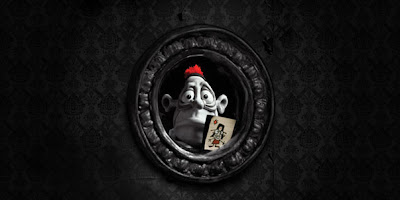
I first had the pleasure of viewing Adam Elliot's first feature length animation film "Mary and Max" at an animation fim festival in Zagreb (Animafest) that myself & my travel companion wandered into almost by accident, seeking shelter from the rainy weather that afternoon. Last night, when I went to view it a second time at Etiuda i Anima, Krakow's own animation festival, I had the bizarre reaction of finding myself already moved to tears in the opening credits. But of course, I knew what was coming. And also because I adore the main theme, which is Perpetuum Mobile by the Penguin Cafe Orchestra.


Elliot's previous animation films can be seen on Youtube ("Cousin", "Brother" and "Harvey Krumpet" definitely, and "Uncle" I've yet to track down). There's something remarkably consistent about Elliot's films, not only is the style the same but the stories and the way they are told are too, to such an extent that they all rather feel like chapters or fragments from a larger encompassing whole - part of a longer story, even though the characters are not the same.

Elliot's imagination for thinking up cruel and unusual punishments for his characters to endure seems limitless. And he uses autobiographical elements, which are exagerated and twisted to become ironic and often surreal. There's something very Candide-esque about Elliot's characters and endless trials and suffering they must undergo, the way they seem to endure and deal with the ridiculous amounts of bad luck life throws at them with total resignation, accepting their fates and the awfulness of life largely without emotion, just a fatalistic acceptance. This is what is at once depressing and hopeful about the stories Elliot tells, and I think is probably very true to life.
The theme of the outcast, the individual who just doesn't seem suited to the world, is recurrent. These outcasts are not rewarded or redeemed, they suffer and keep on suffering till the bitter end, but implicit in the stories is the message that "fitting in" is really the least of your worries.

There is no sadness and little poignancy in the telling of Elliot's tales (although perhaps the exception is Mary & Max, which does have a slightly different feel). In the 3 shorter films I mentioned above, the twists & turns of the lives the characters, the litany of woes and misfortunes is recounted in a kind of deadpan, sometimes crude style, the narrator appears entirely unmoved by what he is describing and the look and feel of the film corresponds to this because it is all quite understated (a lack of accompanying music in the earlier films contributes to this feel, I think, and if in fact quite conspicuous by its absence).


What all Elliot's wonderfully human characters seem to share is an oustanding capacity for quiet perseverance, of trudging on with life against the odds, in the face of the sheer bloody awfulness of it all. Awfulness that is entirely without meaning & without justice. And that contributes to a kind of sad, melancholic realism, there is no glorification of suffering and little pathos, as typically is overdone in many other non-animated films.


Especially in the earlier stuff there is also a kind of ugliness to the look of the animation itself, accentuated by the lack of colour. The characters initally appeared to me as quite horrifying creatures, that would be better suited to a film of a different nature - i.e. one designed to scare & disgust, not tell a tale of the triumph of hope & humanity over almost absurd levels of adversity. But I suppose this can be compared to a director who deliberately does not use beautiful actors. In the same way, Elliot's animated characters are not smooth nor airbrushed, with an aesthetically appealing finish, but instead appear as imperfect creations, who we are faced with "warts and all."

Notice

This is an explanation of a slight alteration in the orientation of this blog, that I am hoping to develop and pursue over the coming months. Not so much a change of direction as an additional dimension/track, that I really wanted to find some channel of expression for, even if it will come at the expense of the coherence & consistency of this blog (such as it is), & what it is about. What I want to begin publishing here are personal responses to culture instead of responses to current affairs or politics. No doubt my self-indulgence has gotten out of all proportion, but it has become something that can no longer be contained inside the illegible pages of my notebooks, or within the alarmingly large collection of photographs I have accumulated, not to mention the chaotic and fragmented reflections inside my head, sparks of inspiration that flicker intensely & urgently for a while and then burn out and die away...

Of course, this is not something entirely new to this blog. When I returned from each of the two film festivals I attended last year (African in Milan, & Far-East in Udine) I felt so moved and inspired that I was compelled to pen some sort of reaction to what I'd seen. The result is hardly critical film reviews of any merit or distinction, rather they were entirely personal reactions and reflections based on subjective emotions and thoughts. But this is because my expertise in the area of film, and indeed fine art, is absolutely nil. I barely know my impressionism from my expressionism, I have to force myself to sit through anything old and in black & white, I'm hardly a great appreciator of these things. Until now, I have categorised things rather crudely into what generally resonates with me, what tends to appeal, and what doesn't (e.g. Surrealism = like, and so forth). Film especially, is something I have always kept a distance from, because the domain seems to me like a vaste quagmire of controversy and subjectivity, where really anything goes, there are no set rules, and everything constantly leads back to the debate fo what is really constitutes art, to which a satisfying answer is never acheived.

If there is one thing that can be said for the last year and a half, it's that they have opened up vaste and numerous new areas of interest to me, which have been revealed to me often by accident, and which I'm sure I'd never have discovered had I goen straight from university to a proper job (if such a thing were even possible for someone emerging from college with a degree such as mine). The film festivals, for instance, I did not attend on my own initiative. In the case of the Far-East, it was even with quite some reluctance that I accepted to go. My pre-conceptions about obscure & innaccessible material being priveleged in such cultural forums, attended by an elite of pretentious & very well-versed film students & critiques, were just too strong. But I'm so glad I did. And it's one of those things, where you really do feel as if the future path of your life, and even the shape of your own identity, in terms of tastes and "personal culture" - is defined by these chance encounters with art, of any kind, which move you. Move you to react, and just move you within yourself. Having had these encounters, your frame of reference broadens out, things which you'd never have looked twice at begin to catch your eye, you become exposed to whole new wealth of culture & experience by virtue of the fact that now you know it's out there, and how wonderful it can be. If last year taught me the value of making the effort to attend film festivals, then this year so far has definitely taught me the value of going to museums and art galleries & actually taking the time to fully understand what they are about, what they are trying to say, instead of touristically floating past everything and exiting with a final judgement picked simply from the liked/didn't like dichotomy (as I did when I stormed out of the Modern Art Gallery of Bologna, having found inside only white walls framing only empty space and occasional cinder blocks strewn around... I've since made the effort to look up the exhibit & the artist online, and it was well worth my while to do so). Art, Museums, and architecture have been for me instilled with a new value, a new richness in & of themselves which they never held for me before, as I always implicitly perceived them as areas reserved for people who "Know what they are talking about" - either through study or practice. Instead it turns out that with a minimum of attention, reflection & research, they can be not only accessible, but also tremendously inspiring, and bring new dimensions of knowledge and understanding of places, eras & events that one had never imagined before.

The key, I suppose, to unlocking this realisation was exposure. And I was lucky enough to have that exposure thrust upon me, by friends, colleagues, teachers, etc. Who suggested, coaxed, encouraged, & sometimes dragged me by the hair to places I would never have gone to under my own steam, and I have realised once I get there (or sometimes long after I have left) that they are wonderful. I could say something quite analoguous about the natural environment, actually, but that will be for another post. It seems the more areas of interest you collect & start wanting to explore, the more you realise just how few hours a day really contains.

But of course, I am still a sociologist at heart (or an aspiring one, at least). And sociologists are incapable of looking at anything without asking the rather cynical question: "cui bono?". As a recent colleague of mine reminded me "There is no such thing as an innocent discourse". This phrase sums up perfectly the approach to academics and to knowledge that I am most convinced by, and it applies just as strongly to art, in all its forms, as to other forms of discourse, such as literature, political rhetoric or the media. And this approach of taking nothing for granted, nothing as neutral, natural or self-evident, can be applied far more widely still. It is the reflex I am trying to instill in myself, and writing about culture is an exercise to that end.

Friday, October 23, 2009

No, we don't want Nick Griffin. But there's no harm in reminding ourselves why.

Nick Griffin described his appearance on Question Time as akin to facing a "lynch mob". In my opinion if that had been the case, it would have been no bad thing. But it wasn't, and it's ironic that a person who fraternises with KKK members and espouses such an intolerant ideology should appropriate such imagery. Telling, perhaps. But in saying so he insults the intelligence of the individuals who so eloquently exposed him, in a manner that was indeed emotional and violent, but quite understandably and rightly so.

I thought the programme, broadcast on thursday night, would amount to basically a regular edition of Question Time, the only difference being Nick Griffin would be able to comment about an issue that frequently comes up on the programme - namely immigration, in much the same way that some of the more disgruntled audience members tend to contribute - rolling out the usual reactionary complaints that the government has lost control of immigration, is allowing everyone and anyone to come in and sponge off the welfare system etc. (These comments always infuriate me because they are invariably full of completely false claims - like that new economic migrants to the UK can immediately receive benefits. FALSE.)

But in fact the debate was something else all together. It did discuss some current events, but essentially just as context points to start off an overarching discussion on the legitimacy (or lack thereof) of the politics of the BNP, and what the party really represents. The point being - that the legitimacy of Griffin & his party was not taken for granted - as critics of his appearance on the show suggested it would entail.

And what a wonderful decision it was, on behalf of the BBC, to give viewers the opportunity to jeer along while Griffin got skewered by British citizens who've actually made a positive contribution with their lives... I mean, when was the last time UK politics was this moving? I certainly can't remember.

Peter hain has since said that:
"Our black, Muslim and Jewish citizens will sleep much less easily now the BBC has legitimised the BNP by treating its racist poison as the views of just another mainstream political party when it is so uniquely evil and dangerous."

Actually, the BBC's decision was completely neutral. What their decision led to however - was a great deal of debate about the dangers of the BNP and far-Right politics, angry reactions and protests in opposition to Griffin and his views and a general raising of the alarm about the rise of British racism & extremism - because electorally speaking - it is on the up, and we can't ignore that. In fact doing so would be stupid and arrogant, and as I've argued before, why hand the "denial of freedom of speech" card over to such nasty individuals just so they can use it to play martyrs, it's entirely counter-productive. Let them tell us their views, let us be outraged and indignant, and then let's banish them back to the abyss from whence they crawled. Sometimes we need to be reminded about what we stand for, by being confronted with a threat to it - and receiving a severe shock in the process. As a black/Muslin/Jewish citizen, I'd sleep far less soundly knowing that the BNP was winning more & more votes, but no-one seemed to be reacting to it. Instead, the controversy has proved that the vast majority of UK citizens are disgusted by the BNP's politics, and willing to fight back against it.

There was a lot of anger from the audience, and indeed from the panel. Hatred, Racism, Disgusting, Outrageous, Repulsion - all highly emotive words that came up again & again. And were not out of place.

Because let's be completely clear about this, Nick Griffin's politics are not acceptable.

That was the overall message I got from the programme. And not just delivered in an "it's bad because it's bad" moralising way - what was so wonderful about it was that they really exposed him, and his party.

I once visited the BNP website and was genuinely shocked to discover, in a very obvious & visible place, a link to a section that contains specific instructions on how to use a particular kind of language to CONCEAL the real convictions underlying the party's "politics". They explicitly inform their party faithful (and the rest of the world, if they're interested) about how to win people to the side, gain supporters by using innocuous terms such as "identity" as euphemisms for those terms which are harder to swallow, like "racist", but which actually don't portray what the party is really about, at all. (I think now most of that content has been put here.) Painting their politics as legitimate when it isn't. What idiot would fall for that? Well, apparently quite a lot did. It seems that the strategy worked, and the pay-off, at the last elections, was such a significant gain that they have arguably acquired a kind of legitimacy by virtue of the ballot box, whatever their dishonest and misleading tactics of winning those votes may have been. But only arguably. And the opposite point was argued beautifully by some members of the panel, such as Greer and Huhne.


I'm currently doing a masters in a field of sociology. So I'm big on questions of "discourse", of "legitimacy"- this is definitely the stuff that floats my boat, academically speaking - terms which many consider little more than "waffle", even in academic circles, unfortunately. But when such a discussion about forms of expression and their implicit links to systems of power and oppression starts taking place in such a mainstream political forum as QT - I can scarcely contain my excitement. Deconstructing the rhetoric is not an activity that often takes place in such forums, generally it's taken at face value, so I was really impressed and heartened to see it.

Because instead of treating Griffin's perspectives as reasonable views, attention was drawn to what I've just described above, the BNP's explicit tactic of hidding its true colours in order to win sufficient electoral support to start implementing its vile, extremist & racist agenda.

Baroness Warsi labeled Griffin "A thoroughly deceptive man" who was "preaching extremism". Huhne also was pretty clear - reminding us that the politics of the BNP is about "looking for someone to blame" and is "as old as the hills". Greer pointed out that the BNP's version of "English history" is completely selective and absolute looney tunes. And let's not be silly. Let's none of us entertain any naive illusions about ethnic homogeneity or nationalism. That consensus was achieved thanks to policies of multiculturalism (for its sins) and political correctness (I won't have a word said against it).

Pointing out falsehoods and lies when they're presented, especially dangerous ones, and on national television, is crucial, and I'm frequently disappointed with Question Time for not operating that policy when audience members come out with lies about immigration. But on this occasion, they were well prepared, instead of allowing a racist discourse to creep into a conversation in a seemingly innocuous way, they exposed it and hammered it into the ground.

I found it all immensely reassuring. Because the worst thing would be - for us to allow a "banalisation" of the far-Right discourse to occur, as is the case in France, where people are desensitised to the dangers and accept their hateful views as just part of the political landscape because that's how they're treated. (this comparison is insightful.)

Last Thursday the tone of audience & panelists oscillated between anger & mockery. Compare & contrast this to any appearance of a member of the "Front National" on mainstream French Television. The tables are turned, it's Marine Le Pen in this instance, who gets outraged and indignant when someone criticises her father for being a racist.

What was so brilliant about the exposing for Nick Griffin was the strong sense that alarm bells are now ringing, that here is a dangerous individual, posing under the veneer of acceptability, without abhorrent political views, and seeking to obtain credibility. And the answer needs to be a resounding: "You can whistle for it."

If this post seems angry I make no apologies, nor do I think the angry black Britons from hard-working families should apologise for their rage. But everyone has a right to be angry about it. And I don't think even the joker who insulted him by deliberately mispronouncing his name should apologise. Why should we take Griffin seriously? After all, he is not a serious politician, he is a racist extremist trying to actively HIDE his true convictions, distort the facts, using the most deceptive kind of spin.

The audience included a lot of young, mixed race individuals, presumably mostly Londoners, who Griffin subsequently described as not "English". Unfortunately for Nick Griffin, these people are absolutely "English" and they represent the future of the population of "England". Thank God.

Sunday, September 27, 2009

Lisbon the Sequel - A Foreign Perspective

When I was involved in campaigning for the Yes during the referendum on the Lisbon Treaty last time around, there seemed to be a ruthlessly determined No side who passionately used any argument their imaginations could conjure to cite as reasons for a vote against. Whereas the Yes side, as far as my recollection goes, and apart from the likes of JEF (the Young European Federalists) and other such exceptions, was far more measured, acknowledging reasons to be dubious and accepting certain criticisms emanating from the No camp. To the point where many final Yes voters and even campaigners seemed to have spent a long time agonising over their decision, because of the compromises it required. Most of the people I had aligned myself with politically, for instance, had attitudes which were positive overall but attenuated by the apprehensions they nursed about the Treaty's actual content, and some of the more difficult to defend aspects of the EU in general.

This time around, it seems the Yes side has learnt from those responsible for its defeat - that such honest doubts and ambivalence are not to be afforded, if a victory is to be won. As a result, we have a Yes side that seems to have acquired the steely determination of its adversaries, as well as its ability to stop at nothing to ensure it goes their way. The cost is obvious. The pay-off as yet unknown.

If I was in Ireland and voting this time around, I'd probably abstain. I'm not trying to be provocative - or wait, only slightly - but essentially I've found so unpalatable the campaigning, even from outside the country, that I don't think I could bear giving a vote that would favour either side in this charade of a "second referendum".

I think when it comes to bullying tactics, neither side has shown itself to be particularly scrupulous. The Yes side have descended to insinuating, or even declaring outright that if Irish people vote no the EU will expell their nation, putting them back into a relationship of dependency with Britain. The idea of an Irish no vote as translating an assertion of independance is nothing but a silly myth, and the reality is that voters have to choose which camp they prefer (or least dread) or else we'll be set for a long hard winter of isolation. Think North Korea or Albania a couple of decades ago.

Of course, this rather pales in comparison to the threats made by the NO side - basically all of your worst fears will come to pass, and then some. Beyond being dubious tactics, most of it is just nonsense, as if Lisbon and the EU are the antithesis of religion and all that is holy (who are the people effectively running the EU? The same sort of people running France & Germany - conservative christians, last time I looked.) It lays itself open to legitimate ridicule because it actively misinforms, and in doing so harms its own cause - or it would if people bothered to find out the truth which, when it comes to the EU, people just never seem to do.

Perhaps as a response to this phenomenon the new & improved Yes side has acquired a slick new look, brought in people who clearly know a thing or two about marketing a product, as well as the value of charismatic orators, and all their arguments have been boiled down to snappy soundbites. While there's nothing wrong with that per se, it makes me personally instinctively more distrustful of their discourse, because there seems to be a concerted effort being made to purposely put the onus on style over substance. As if an attempt is being made to draw our attention away from something else. To put it bluntly, I know the bitter pills and the complexity are being swept under the carpet, and I just don't buy it.

What also makes me uneasy on the Yes side is the sense I have that underlying the new, aggressive drive is an agenda that was absent last time around, which I can't quite put my finger on. Maybe it's just paranoia. But a more solid reason for a protest abstention (or the temptation of such a vote - notwithstanding its complete futility) would be about there even being a referendum at all given the total lack of free and clear information, the level of scaremongering and disinformation. So much for a free and independent choice, but then I suppose you could say the same of a vote on anything, and certainly of any election.

In campaigning for the Yes myself I had to overlook a lot of things that didn't sit right with me, and had to defend them (the EU's attitude to immigration is a particularaly jarring one). That's what being in a political party entails (and which incidentally is partly the reason I no longer am).

Other factors that have contributed to the shift in my views would be getting on the wrong side of EU bureaucracy last year year, which taught me just how irrational, not to say infuriating, it can be.On a less pratical and more theoretical level - there was the highly revealing and profoundly depressing information I acquired during a seminar given by the Corporate Europe Observatory (CEO). Information about the close links between the EU institutions and "commercial interests" - it's not even links - they kind of meld into one another without anyone being able to distinguish where to draw the line (an example - when executives of big companies are called in to act as "experts" on panels when legislation is being drawn up - giving them more power and influence than the members of the European Parliament - this stuff is routine). That showed me a different side of Brussels than the one I've known all my life. The one where NGOs campaigning for transparency, for environmental and social justice, equality, etc, are completely trodden on, dwarfed and drowned out by the immense weight of the towering commercial entities and those representing their interests. Where consultancy firms who've defended everyone from South American dictators to war criminals and fraudsters operate without anyone raising an eyebrow from their luxurious offices just across from the Berlaymont.

I haven't quoted anything in this post because it's more about the issue as an emotive one for me, my reactions to what I've followed of the whole thing, as well as my own recent experiences which have led me to my current perspective. That's exactly what it is, a perspective.

I cannot defend the whole project. I could not say YES to the whole treaty. Maybe I am becoming more of a reactionary in my old age, more like Besancenot in believing that actually, instead of toeing the line, instead of going along with it, and hoping things get better, why not spend my time and energy taking the steps towards fighting for, defending and creating the Europe that I WANT.

But alongside these improbable aspirations, there exists a real world. And while we're constrained to exist inside it I'll still advise anyone who'll listen to vote Yes. For the same reason that it is better to have the Europe we do have, than no Europe at all. Because it has brought about good things, and has the potential to do a great deal more. So support the yes side, because no matter how iffy their campaign has been, they're still better than those jokers on the No side who have trafficked in the most outrageous of untruths, and employed the most shameful of tactics. That's unfortunately what democracy is all about.